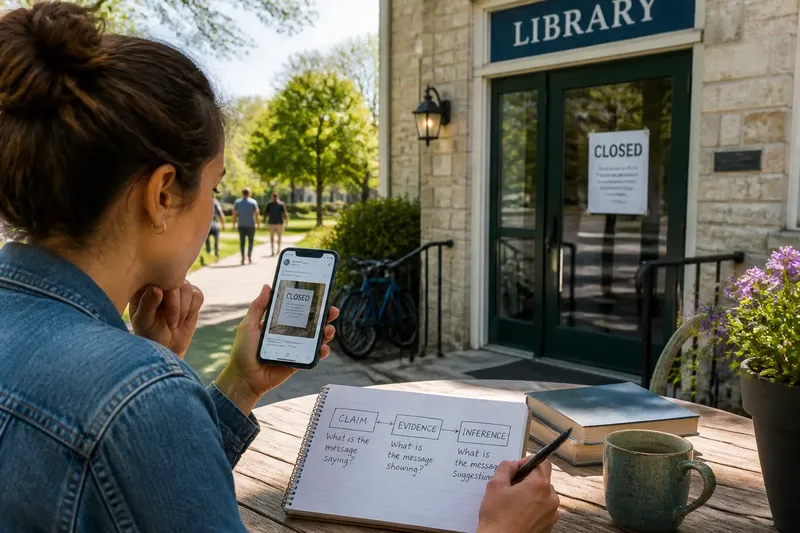
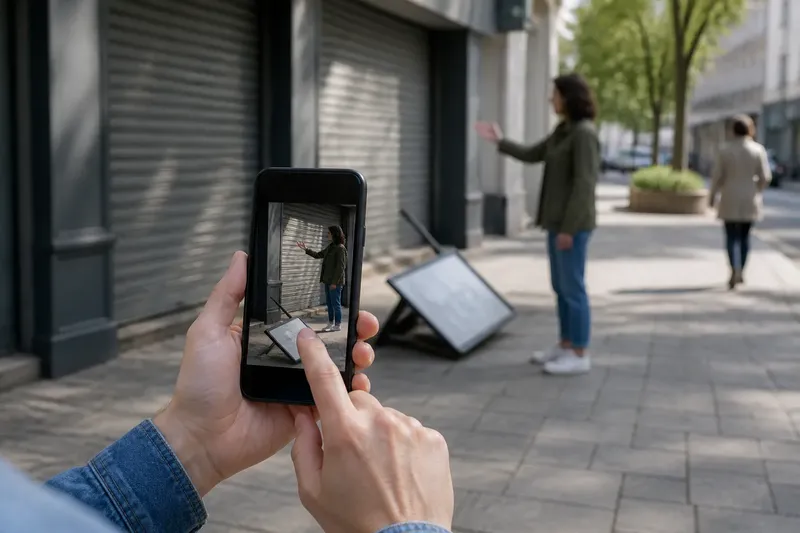
A Pause Before You Forward It
A pause before you forward it helps you check the exact claim, source and context, then decide whether sharing will help someone or just spread noise.
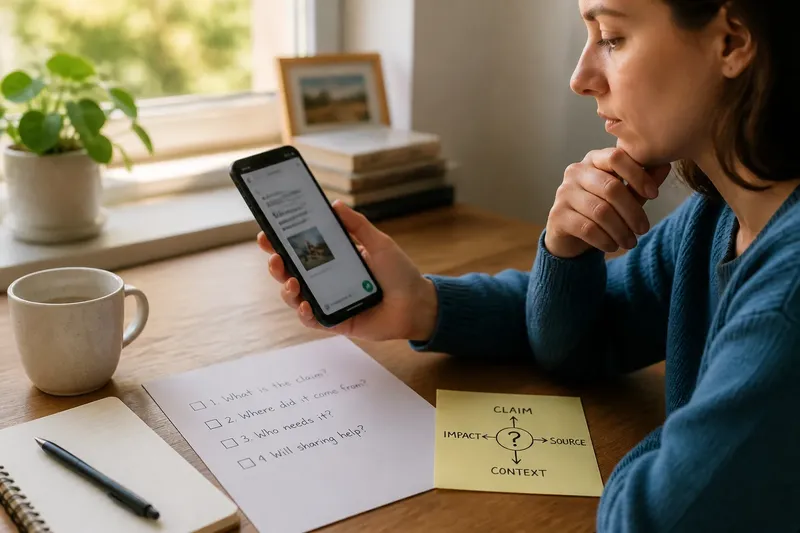
Your thumb is over the forward button when a neighbor’s group chat fills with a warning about a school closing. Before you pass it along, take a pause before you forward it: name the claim, inspect where it came from, and ask whether another person needs it from you. This small routine is not a demand to investigate every message like a reporter. It is a way to choose what kind of response fits the message in front of you.
Start by deciding what the message asks you to pass on
Messages often bundle a factual claim with a reaction or a request. “The library is closed today” is a claim; “this is outrageous” is a judgment; “send this to everyone” is an instruction. Separate those parts before you decide what to do. A vivid warning may make the instruction feel urgent even when the underlying claim is vague.
Put the main factual point into one plain sentence. Keep the who, what, and when if the message supplies them. If you cannot state the claim without adding your own guess, that is a sign to hold off rather than forwarding the whole bundle.
Then ask what someone receiving the message would likely believe or do. A notice that a road is closed could change a commute; a dramatic caption about a public figure might simply invite an argument. The likely consequence helps set the level of care the message deserves.
Match your next move to the situation
A useful pause is not a single verdict. The right choice depends on the message’s clarity, the source available, and the reason for sharing. Sort the message into the situation that best fits; when it sits between two, choose the more cautious response.
- A clear, time-sensitive notice from a direct source: If the message links to an official school, transit agency, or venue notice that names the affected place and time, you may pass along that link to people who need it. Preserve the link and any limits in the original notice; a short note about who it concerns is more useful than a bare “FYI.”
- A specific claim with a traceable but unfamiliar source: Open the original item, rather than relying on a screenshot or someone else’s summary. Check whether the source identifies who is speaking and points to material that supports the claim. If the details remain unclear, do not forward it as settled information.
- A claim missing its source, date, or context: Keep it to yourself for now. A cropped post, unsourced quote, or old notice can look current once it is detached from its original setting. If the claim matters to someone, look for a source that can clarify it before sharing.
- A message that mainly provokes anger, fear, or mockery: Pause longer, especially if its wording pressures you to spread it immediately. Ask whether forwarding would inform someone or recruit them into a reaction. If you cannot name a practical benefit, leaving it unshared is a complete decision.
- A personal message that could expose someone: Do not pass along names, addresses, private screenshots, or identifying details simply because the message says it is urgent. Consider whether the person has agreed to wider sharing and whether a private, relevant recipient is more appropriate. If safety or legal consequences are involved, seek qualified guidance rather than trying to settle them in a group chat.
Inspect the source and context without turning it into a project
Source checking begins with the item behind the forward. Follow the link if there is one; look for the original notice, statement, or post and see whether it actually says what the forwarded message claims. A headline, preview card, or screenshot may leave out a qualification that changes the meaning.
Check the publication date and the scope of the claim. “Closed” could mean one branch, one afternoon, or every location; “new policy” could refer to a proposal rather than a rule already in effect. Look for named places, dates, and responsible organizations, not just confident wording.
Use a search for a distinctive phrase from the claim when the original is hard to locate. A relevant organization’s own site may clarify a notice; another post repeating the same text may only lead back to the same unverified source. Several copies do not automatically provide several independent reasons to believe a claim.
If a screenshot has no link, search for the account or organization named in it and compare the wording with its original channel. If you cannot find the original, treat that gap as a reason not to present the screenshot as confirmed. The goal is not to prove the opposite; it is to avoid giving uncertain material a stronger endorsement than it has earned.
Ask whether forwarding adds something useful
Even a well-sourced claim does not always need another messenger. Before sharing, identify the recipient and the action the message could help them take. A nearby closure notice may help a person planning a route; the same notice may be irrelevant to a distant group with no connection to the location.
Imagine you receive a verified notice that a neighborhood meeting has moved to a different building. You confirm the change on the organizer’s page, then send the link to a neighbor who planned to attend, with a note naming the new venue. That adds a clear, useful detail; forwarding the notice to every contact would add reach without adding much help.
Sometimes the best contribution is a correction, not a forward. If a message leaves out a date or overstates what its source says, reply with the original link and a precise note about what it confirms. Avoid repeating the alarming claim in a new headline of your own, which can make the claim travel farther than the correction.
When you cannot add context, a recipient, or a useful action, silence can be the more responsible choice. It does not mean the claim is false or unimportant. It means you are not yet the person who can improve its passage.
What should you do when the message feels urgent?
Should I forward a warning while I am still checking it?
Usually, do not forward an unverified warning as though it were established. If someone faces an immediate, concrete risk, direct them to an appropriate official or emergency channel rather than circulating an uncertain claim; contact emergency services when there is an immediate threat.
What if the message comes from someone I trust?
Trust the person’s intentions without assuming they had time to check the source. Ask where the information originated, or look for the original notice yourself before passing it on.
What if I cannot find the original source?
Leave the claim unforwarded, or tell the sender plainly that you could not confirm it. A missing source does not settle whether the claim is true, but it does limit what you can responsibly say about it.
Can I share a claim if I say it might be wrong?
A caveat helps only if it changes how the recipient understands the message; the claim may still spread without your warning attached. If sharing serves no clear purpose, do not use uncertainty as a reason to pass it along.
Make the pause easy to remember
Keep three questions beside the forward button: What exactly is being claimed? Where is the original source, and what context might be missing? Who would benefit from receiving this, and what would they do with it? They work like a label on a file folder: a small cue that keeps the contents from being mistaken for something else.
With practice, the pause can be brief. Clear, relevant notices may earn a careful share; unsourced or stripped-down claims can wait; and messages with no useful recipient can stop with you. A pause before you forward it is not hesitation for its own sake—it is a chance to pass along information with its meaning intact, or to let it go.