Cropping Changes a Photograph's Frame, Not Its History
Learn to read a cropped photograph without mistaking visible detail for missing context, and use a simple routine to check what the frame can support.
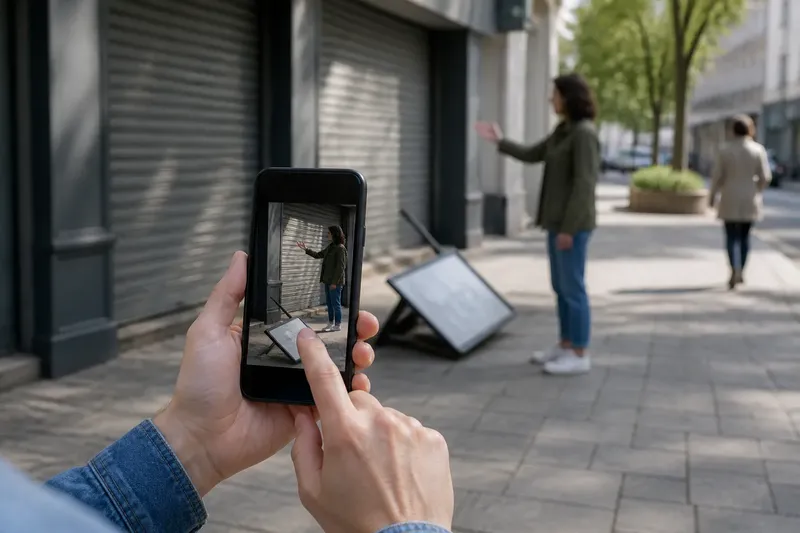
A photograph on your phone shows a person standing beside a toppled sign, one hand lifted toward it. The tight crop makes the gesture feel pointed; the uncropped image might show a gust of wind, a second person, or nothing that resolves the moment. Reading a cropped photograph carefully starts with separating what the image displays from what you imagine happened beyond its edges.
A crop changes the photograph’s frame: which details remain visible and how attention moves among them. It does not, by itself, establish why the image was made, what occurred before the shutter clicked, or what lies outside the scene. A steady routine for checking those limits can keep a striking picture from becoming more conclusive in your mind than its visible evidence allows.
Start with the visible frame, not the implied story
Look at the photograph before reading its caption or accompanying post, if you can. Note the people, objects, gestures, setting, and relationships that are actually visible. Be precise: “a person has one hand raised” describes the pixels; “the person is threatening someone” assigns a purpose that the pixels alone may not settle.
That distinction is not a demand to ignore context. It is a way to keep direct observation from quietly turning into a claim. A face may look tense, but a still image cannot show what the expression meant to the person, how long it lasted, or what prompted it.
Use a simple private rule: describe before interpreting. If you cannot point to a visible feature that supports a sentence, mark that sentence as an inference rather than an observation. This takes little effort and leaves room for context without pretending you already have it.
Notice where the crop directs your attention
A crop can make one object seem central by removing competing details. A close view of a crowded sidewalk may foreground a confrontation; a wider view could include a bus, a queue, or people passing without watching. The close view remains a view of that moment, but it gives less of the surrounding scene to inspect.
Look at the borders. Does a shoulder enter from the edge? Is a hand cut off? Does the floor, street, or doorway continue beyond the visible area? These clues do not reveal what the missing space contains. They do help you notice that the image has boundaries and that the composition has emphasized some details over others.
It can help to treat the frame like a window in a door: you can describe what the opening shows, but you cannot use it to certify what is happening down the hall. The analogy has a limit, since a photograph is also a selected and possibly edited image, not a transparent opening. Still, it is a useful reminder to keep the unseen area unseen in your account.
Keep a weeklong image-reading routine
For one ordinary week, choose a single photo in your feed each day that carries a strong implied story. Give it a brief, repeatable check rather than opening every image investigation you encounter. The point is to make a habit of noticing the difference between the frame and the explanation attached to it.
- On the first day, describe. Write down only what you can point to in the image: visible people, objects, gestures, and setting.
- On the second day, mark the borders. Notice anything cut off and list the questions the crop leaves open, without filling in answers.
- On the third day, inspect the caption. Separate claims about the visible scene from claims about motives, timing, or events outside the image.
- On the fourth day, look for another version. Search for the same photograph through the original post, a reputable image archive, or a reverse-image search service. Treat a wider version as added visual context, not a complete account of what happened.
- On the fifth day, compare presentations. If another version appears, note what is newly visible and whether the crop changes which detail attracts your eye. Avoid assuming that a difference in framing proves deceptive intent.
- On the sixth day, review your wording. Replace any sentence that turned a visible gesture into a certain motive with wording that makes the inference clear.
- On the seventh day, decide what the image can support. Keep, qualify, or set aside the claim according to what is visible and what remains unknown.
Say you see a cropped image of a person holding a cardboard sign near a closed shop. The post says the person is celebrating the closure. In your notes, you record the visible sign and the shopfront, then mark the celebration and its supposed cause as interpretations; if a wider image appears, you add only the new details it actually shows. The observable result of this routine is a description with fewer unsupported claims, not a verdict about the event.
Search for context without treating a wider image as the whole story
A reverse-image search can help locate earlier appearances of a photograph or a less tightly framed version. Search results may surface old posts, reposts, or images with captions that disagree. Those results are leads, not automatic confirmation: a caption can travel farther than the image’s original context.
Compare what each version actually contains. A wider frame might show a sign, another person, or a nearby landmark that was excluded from the crop. It may answer a question about the composition while leaving questions about timing, cause, and what happened next unresolved.
When possible, trace the image to the account or publication that first shared it, then read the surrounding material. Look for a date, location, photographer credit, or link to an original report. If the trail ends at repeated reposts, say so to yourself plainly: the image’s origin remains unclear.
Do not infer tampering just because the crop changes between posts. Cropping can be used to fit a layout, make a subject legible, or focus a design. It can also steer attention. The visible change is evidence of a different frame; intention requires additional information.
What can a photograph establish, and what stays outside it?
Does a tight crop prove someone wanted to mislead viewers?
No. A tight crop shows that part of the image has been left out of the version you are viewing, but it does not establish why. Layout choices, readability, and selective presentation are all possible explanations; the image alone may not distinguish among them.
Can the uncropped image tell you what happened before the photo?
Usually, it can add visible surroundings, not a complete account of earlier events. A wider view might show where someone was standing, while leaving the reason for their gesture unknown. Look to reliable accompanying material for claims about what happened before the shutter clicked.
What if two versions show different details?
Record the difference without deciding that one version settles the whole scene. Check whether the images appear to show the same moment and whether a credible source explains their origin. If that cannot be established, describe the uncertainty rather than choosing the version that best fits the caption.
How should I describe a gesture when its meaning is unclear?
Name the movement you can see and avoid assigning a motive as fact. For example, “the person’s arm is raised” is narrower than “the person is warning the crowd.” You can mention a possible interpretation, but label it as one.
Choose wording that leaves room for what the image cannot show
When you share or discuss a photograph, make the boundary between observation and interpretation audible. “The image shows a damaged window” is different from “the crowd damaged the window.” The first describes a visible condition; the second adds an actor and an action that may need separate evidence.
Small phrases can keep that boundary intact: “the crop shows,” “the caption claims,” or “the image does not establish.” These are not evasions. They tell another reader which part comes from the photograph and which part depends on information beyond it.
Before you repeat a strong claim attached to an image, return to the photograph’s edges. Ask what remains visible, what has been excluded, and which conclusions need information the frame cannot supply. Cropping changes a photograph’s frame, not its history; the most useful account makes that limit clear while staying attentive to every detail the image does show.