Who Is Speaking, and How Would They Know?
Learn how to match firsthand observation, reported information, and expertise to the questions each source can answer—and spot where its reach ends.
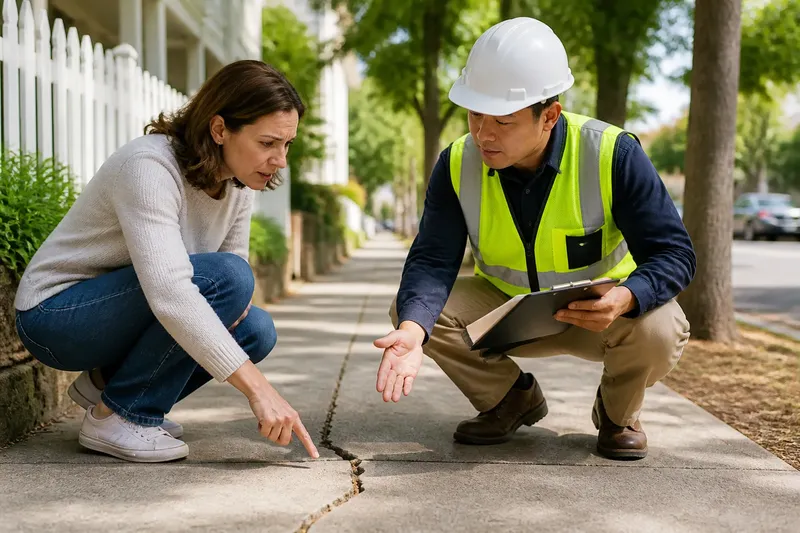
A neighbor points to a fresh crack in the sidewalk and says the ground shifted overnight. A city engineer explains how freeze-thaw cycles can damage pavement. Both may be useful sources, but they are speaking from different kinds of access. When you assess a claim, asking who is speaking—and how they would know—helps reveal what their account can support.
Access shapes what a source can answer
Firsthand observation comes from direct contact with an event or object: seeing a delivery truck block a driveway, hearing an alarm, or reading a notice posted on a door. It can be especially useful for questions about what a person experienced in a particular place and moment.
But direct contact does not make someone an all-purpose authority. A witness may describe the truck’s color and where it stopped without knowing who hired the driver or why the delivery was delayed. Observation has a boundary: what the person could perceive, under the conditions they were in.
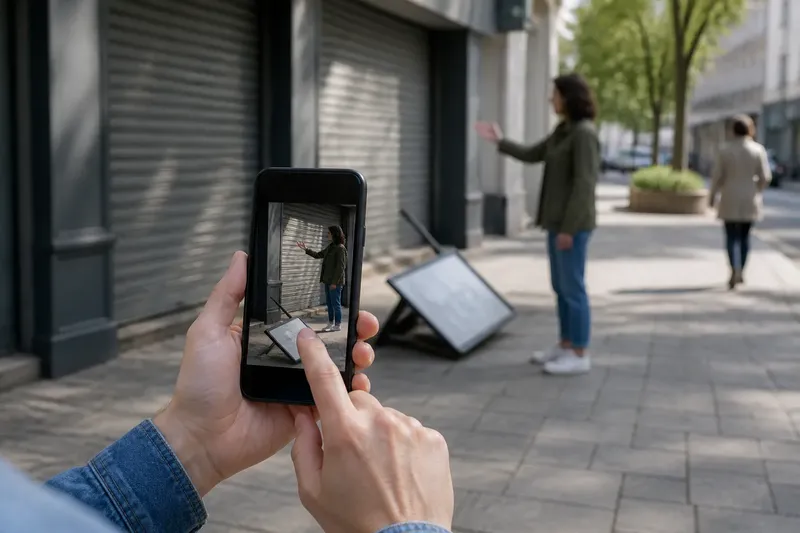
Reported information travels through another person or document. A reporter may speak with residents and officials; an employee may summarize a meeting; a post may repeat what a friend heard. Each link creates a question: who supplied the information, and can the chain be followed back to someone with direct access?
Expertise is a different kind of access. It comes from relevant training, work, or sustained study that helps someone interpret evidence or explain how a system behaves. An engineer can discuss pavement failure mechanisms, but expertise alone does not establish what happened on one block last night.
Think of these source types as different tools in a kitchen drawer. A thermometer can tell you about temperature, while a recipe can explain what to do with it; neither replaces the other. The useful source depends on the question, not on which kind sounds most impressive.
Match the source to the question
Before weighing a source, make the question precise. “What happened?” can mean several things: What did a witness notice? What caused the event? How common is the pattern? What does a rule require? Those questions call for different kinds of access.
- For a particular person’s experience: A firsthand account can describe what they saw, heard, or encountered. Keep the claim close to that experience rather than extending it to everyone involved.
- For an event’s sequence: Seek accounts or records that cover the relevant times and locations. A single witness may have a clear view of one moment, while a timeline may depend on several sources.
- For a technical explanation: Look for expertise in the specific subject. A person who understands building ventilation may be well placed to explain airflow, but not necessarily a building’s lease terms.
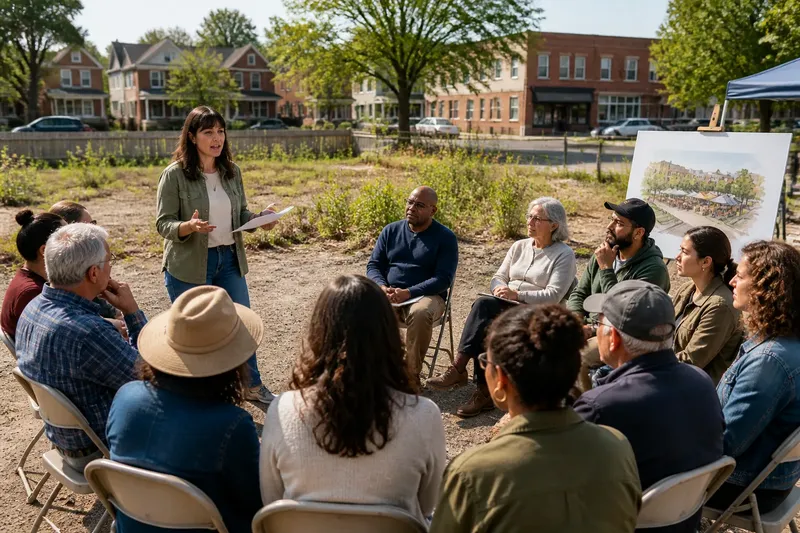
- For a broader pattern: Ask whether the source has access to information across cases, not merely one vivid example. A researcher, professional body, or carefully described dataset may help, depending on the claim.
- For an official decision or requirement: The relevant agency, policy, or legal document may be the primary source. An expert can explain its context, but the underlying text matters for what it actually says.
These are not rankings. A firsthand account may be the best evidence of a person’s own experience, while a technical specialist may be better placed to explain a mechanism. The source that answers one question can be a poor fit for the next.
Trace reported information back a link
Secondhand claims often arrive with the original source blurred: “People are saying,” “a colleague heard,” or “the report found.” Those phrases may be accurate descriptions of how a claim traveled, but they do not tell you who could verify it.
Look for a name, document, recording, or direct link that identifies the origin. Then check whether the person or material actually supports the version being repeated. A quotation may be shortened; a summary may turn a possibility into a certainty; a message may omit who was present.
When the original source is unavailable, keep the claim attributed. “A resident said the notice arrived Tuesday” is more careful than “The notice arrived Tuesday,” unless another source establishes that date. Attribution preserves the distinction between an account and a settled detail.
Also notice when several reports are not truly independent. If multiple posts all quote the same unnamed message, their repetition does not create several separate routes to the information. Following the trail can reveal whether apparent agreement comes from different access or one source echoed many times.
Expertise has a scope, not a halo
Credentials are relevant when they connect to the question. A cardiologist may be qualified to explain heart conditions; that does not automatically make them an authority on every medical, economic, or public-policy claim. Ask what the person works on and what evidence they are interpreting.
Good expertise also has limits. A specialist may explain a plausible cause without knowing which cause operated in a specific case. For an individual diagnosis, for instance, general knowledge cannot replace the details available to a clinician evaluating that person.
Notice how the expert presents uncertainty. A careful explanation separates established information from an estimate or open question. Confident delivery can make a claim sound polished, but confidence is not a substitute for relevant knowledge or access to the evidence.
It can help to separate two roles: the person who has the underlying records and the person who can interpret them. A local official may know what a department logged; an outside specialist may be better equipped to explain what those records mean. Neither role automatically settles the other’s part.
What can each kind of source answer?
What can a firsthand witness establish?
A witness can offer an account of what they personally perceived, including the conditions that shaped it. Their account alone may not establish a cause, motive, or detail outside their view.
How can I tell whether information is secondhand?
Look for phrases such as “I was told,” “according to a post,” or “the report says,” then identify the person or document being relayed. If the original cannot be reached, keep the claim clearly attributed rather than presenting it as directly confirmed.
Does a professional title settle a disputed question?
No. A title can indicate relevant training, but the subject still needs to fit the person’s field and the question at hand. Check whether they explain the evidence and distinguish what they know from what they infer.
What should I do when sources disagree?
First compare what each source had access to: a witness’s view, a record, or specialist interpretation. Then narrow the disagreement to the point that remains unresolved, rather than treating every account as equally informed about every part.
Use a small claim as a source check
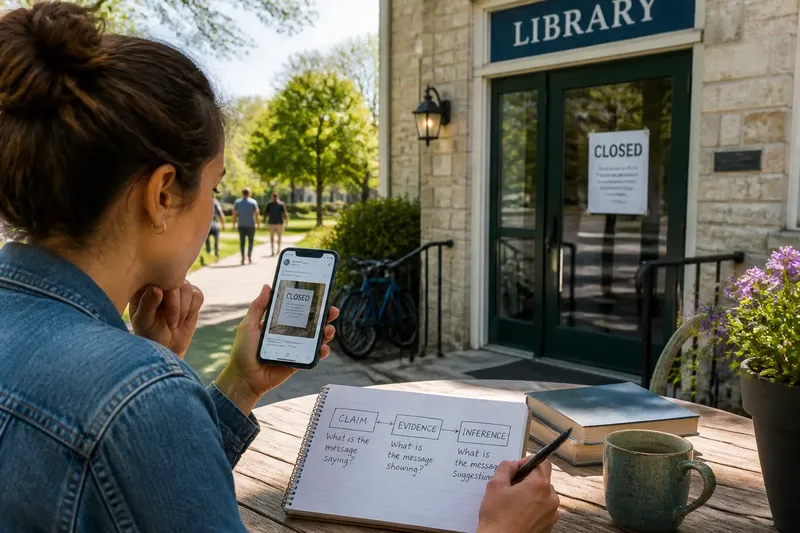
Imagine you see a neighborhood post saying a library branch closed early because of a heating failure. The person who was waiting outside can describe the locked entrance and a notice on the door. A library employee may know what the branch recorded about the closure, while a heating specialist could explain what a reported equipment problem might mean.
Those sources do not answer the same question. If you want to know whether the branch closed, the posted notice or an official update may be most direct. If you want to know what a visitor encountered, that visitor’s account is relevant; if you want the technical cause, seek a source with access to maintenance information or suitable expertise.
The example also shows why a plausible explanation should not quietly become a verified cause. A locked door supports an account of access, not a diagnosis of the heating system. Keep each statement within the reach of the source that supports it.
Keep the source attached to the claim
In notes or conversation, write the claim alongside its source type: “witness account,” “staff update,” or “technical explanation.” Add what that source could directly know. This small habit makes it easier to spot when a statement has expanded beyond its support.
Then ask what would answer the next question. A witness may point toward a time and place; a record may clarify a sequence; a specialist may interpret a mechanism. The best account often comes from recognizing these distinct roles, not asking one speaker to do every job.
When evaluating who is speaking and how they would know, the most useful question is not simply whether a source is trustworthy. Ask what this source can establish, what lies outside its access, and which kind of source could fill that gap. That gives the claim a clear boundary—and gives you a more reliable way to decide what remains uncertain.